Making your own kimchi is a fun and rewarding process! This recipe is a great starting point for beginners and uses ingredients that are readily available in most U.S. grocery stores.
Ingredients You’ll Need
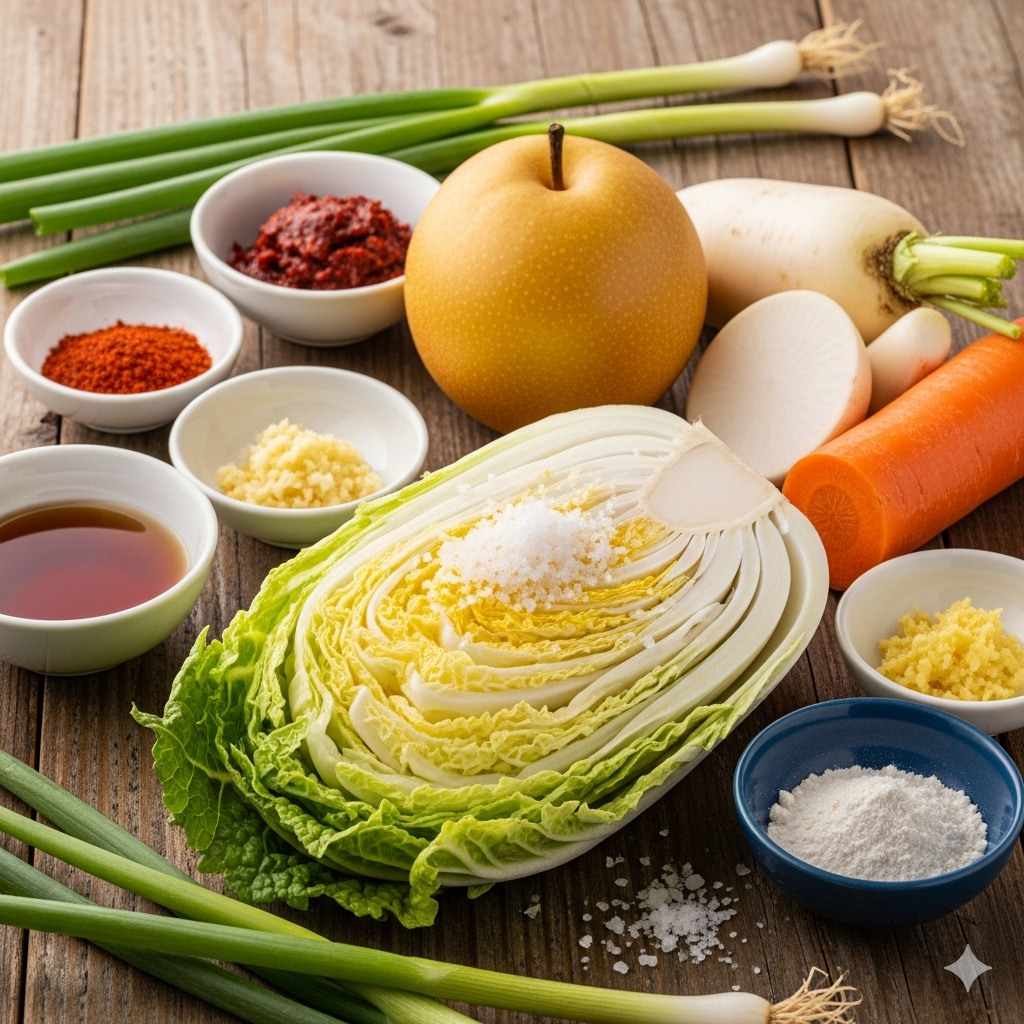
Main Ingredients:
- 2-3 lbs Napa Cabbage: This is the most common cabbage used for kimchi. Look for a firm, heavy head.
- 1 cup Kosher or Sea Salt: Do not use iodized table salt, as it can give the kimchi a bitter taste. The salt is crucial for drawing out water and preserving the cabbage.
- 10 cups cold Water (for brining)
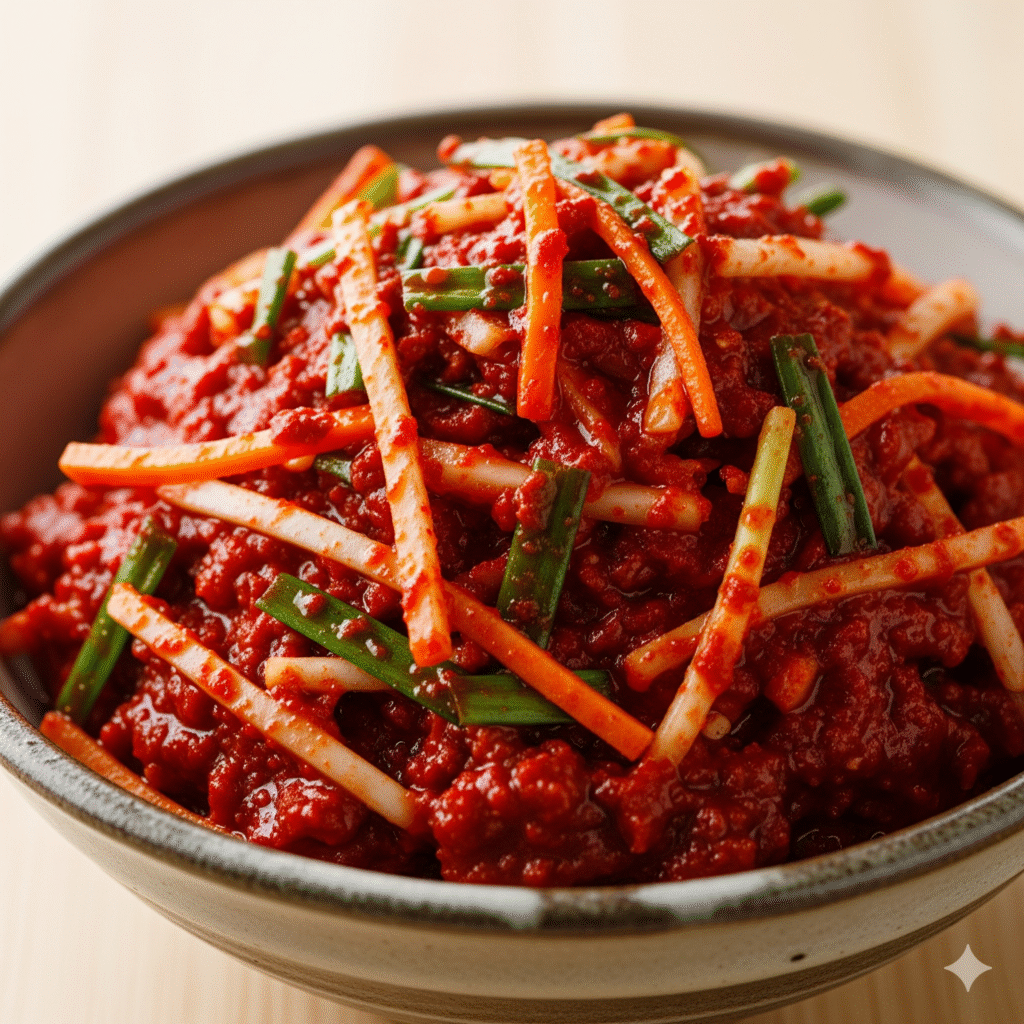
Kimchi Paste (Kimchi-Yangnyum) Ingredients:
- 1 cup Korean Red Pepper Flakes (Gochugaru): This is the most important ingredient for the color and classic spicy flavor. You can find this in an Asian market.
- 1/2 cup Fish Sauce (or Soy Sauce for a vegetarian/vegan option): Adds a salty, umami depth.
- 1/4 cup finely chopped Garlic: About 10-12 cloves.
- 2 tablespoons grated Ginger: A fresh, spicy kick.
- 1 Asian Pear (or Fuji Apple), grated: This adds a natural sweetness that balances the spice.
- 1/4 cup Sweet Rice Flour (or regular All-Purpose Flour): Used to make a slurry (paste) that binds all the ingredients together.
- 1 cup Water (for the sweet rice flour slurry)
- 1/4 cup Sugar
- 1 bunch Scallions (Green Onions), chopped into 1-inch pieces
- 1 Korean Radish (Daikon Radish), julienned (cut into thin strips): If you can’t find this, you can use regular radish, but it will have a different texture.
- 1 small Carrot, julienned
Step-by-Step Instructions
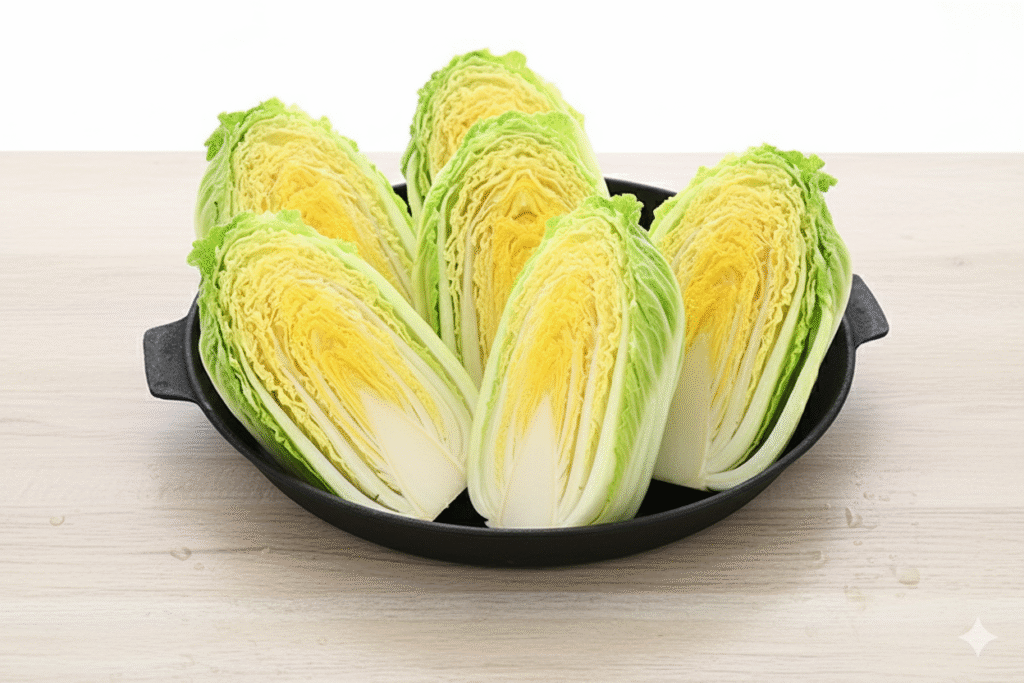
1. Salting the Cabbage
- Cut the napa cabbage in half lengthwise, then into quarters. Cut out the tough core.
- Chop the cabbage quarters into bite-sized pieces (about 2-3 inches).
- In a large bowl, mix the cabbage and salt thoroughly by hand. Add the 10 cups of water. The salt water will wilt the cabbage.
- Let the cabbage sit for 2-3 hours. Every 30 minutes, gently toss the cabbage to ensure it’s evenly salted. You’ll know it’s ready when the leaves are soft and bendable without breaking.
- Rinse the cabbage thoroughly under cold running water, about 3-4 times. This is the most crucial step to remove excess salt. Squeeze out as much water as you can. Taste a piece—it should be slightly salty, but not overwhelmingly so.
2. Making the Kimchi Paste (Kimchi-Yangnyum)
- In a small pot, whisk together the 1 cup of water and the sweet rice flour. Heat the mixture over medium-low heat, stirring constantly until it thickens into a translucent paste. Let it cool completely.
- In a large bowl, combine the cooled sweet rice flour paste, gochugaru, fish sauce (or soy sauce), garlic, ginger, grated pear, and sugar. Mix until it forms a smooth, thick paste.
- Add the chopped scallions, julienned radish, and carrot to the paste. Mix well.
3. Combining Everything
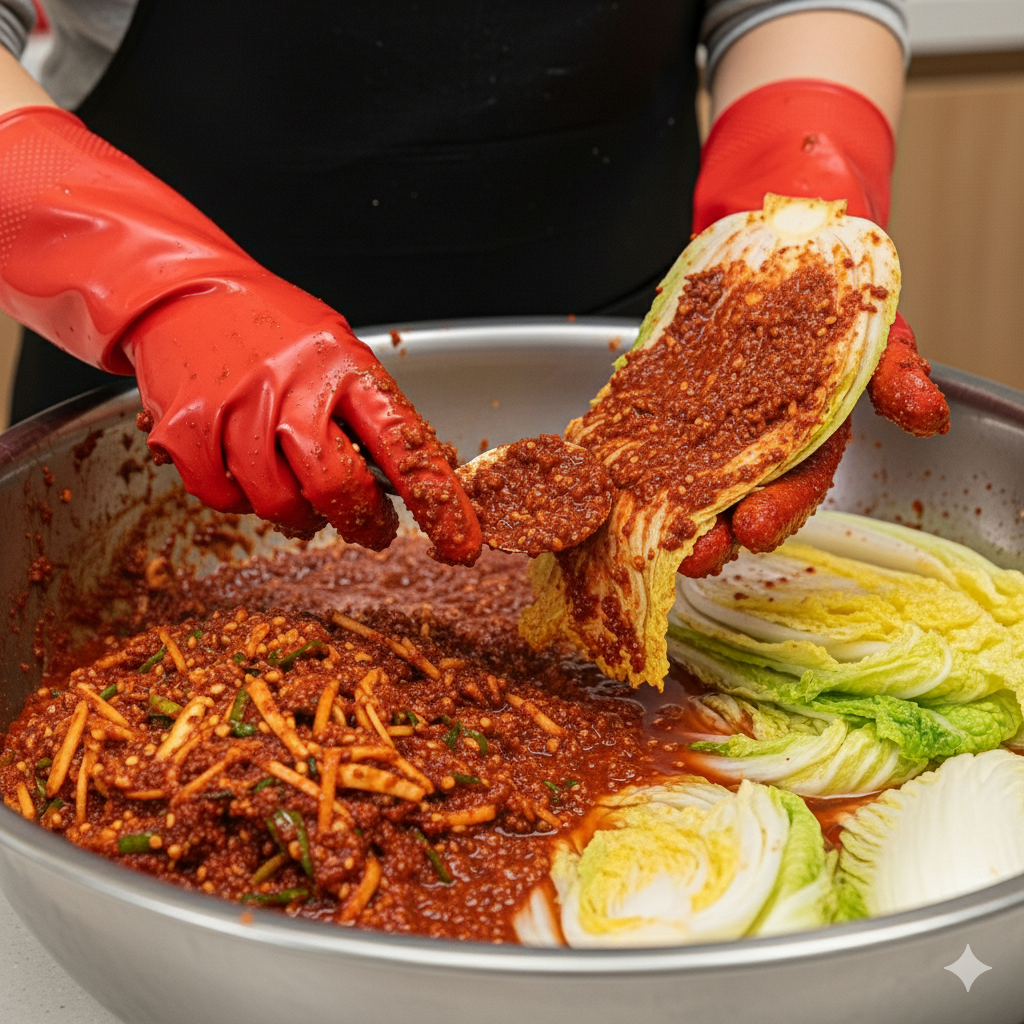
- Put on disposable gloves. This will protect your hands from the strong spice and smell of the paste.
- Add the rinsed and drained cabbage to the bowl with the kimchi paste.
- Use your hands to thoroughly massage the paste into the cabbage pieces, making sure every leaf is coated evenly.
4. Fermentation and Storage
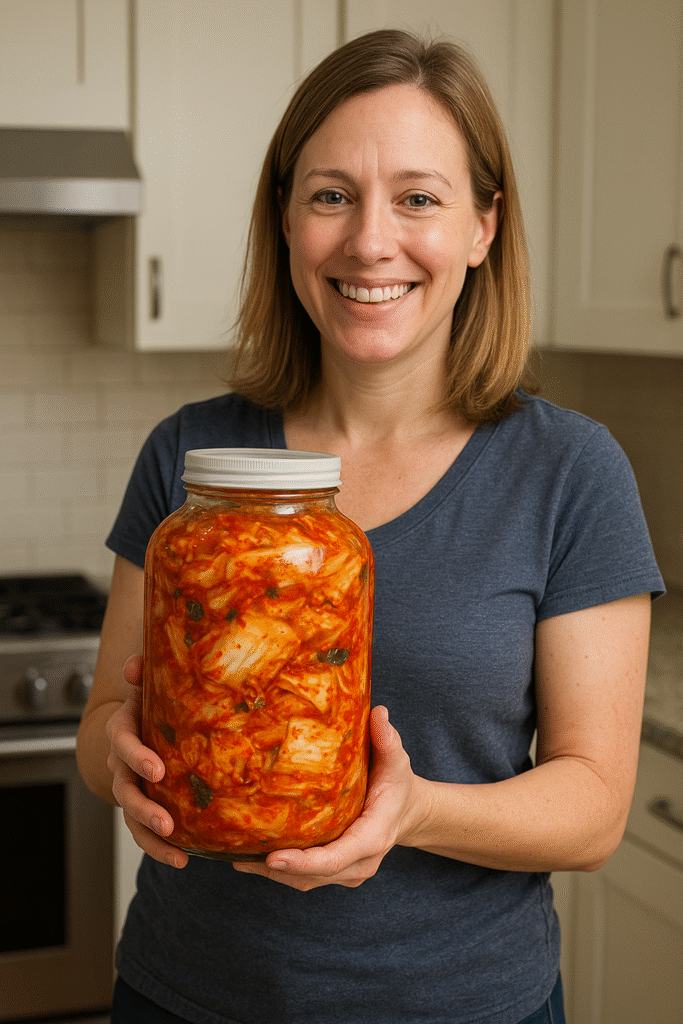
- Pack the kimchi tightly into a clean glass jar or a sealed plastic container, leaving about an inch of space at the top. This space is needed for the gas that will be produced during fermentation.
- Leave the jar out on the counter at room temperature for 1-2 days. Check it daily—you might see small bubbles forming. This is a sign of healthy fermentation. The kimchi is ready to be refrigerated once it has a slightly sour smell and taste.
- Once it’s sour enough for your liking, transfer the kimchi to the refrigerator. The cold temperature will slow down the fermentation process, but it will continue to develop flavor over time.
Important Notes and Tips for Beginners
- Gloves are a must! The chili paste will stain your hands and can cause a burning sensation.
- Rinse the cabbage well. If you don’t, your kimchi will be too salty.
- Taste as you go. Before you add the cabbage, you can adjust the kimchi paste’s flavor by adding more sugar for sweetness or fish sauce for saltiness.
- Air is the enemy. Make sure the kimchi is pressed down into the jar so that it’s submerged in its own juices. This prevents mold.
Different Types of Kimchi to Try
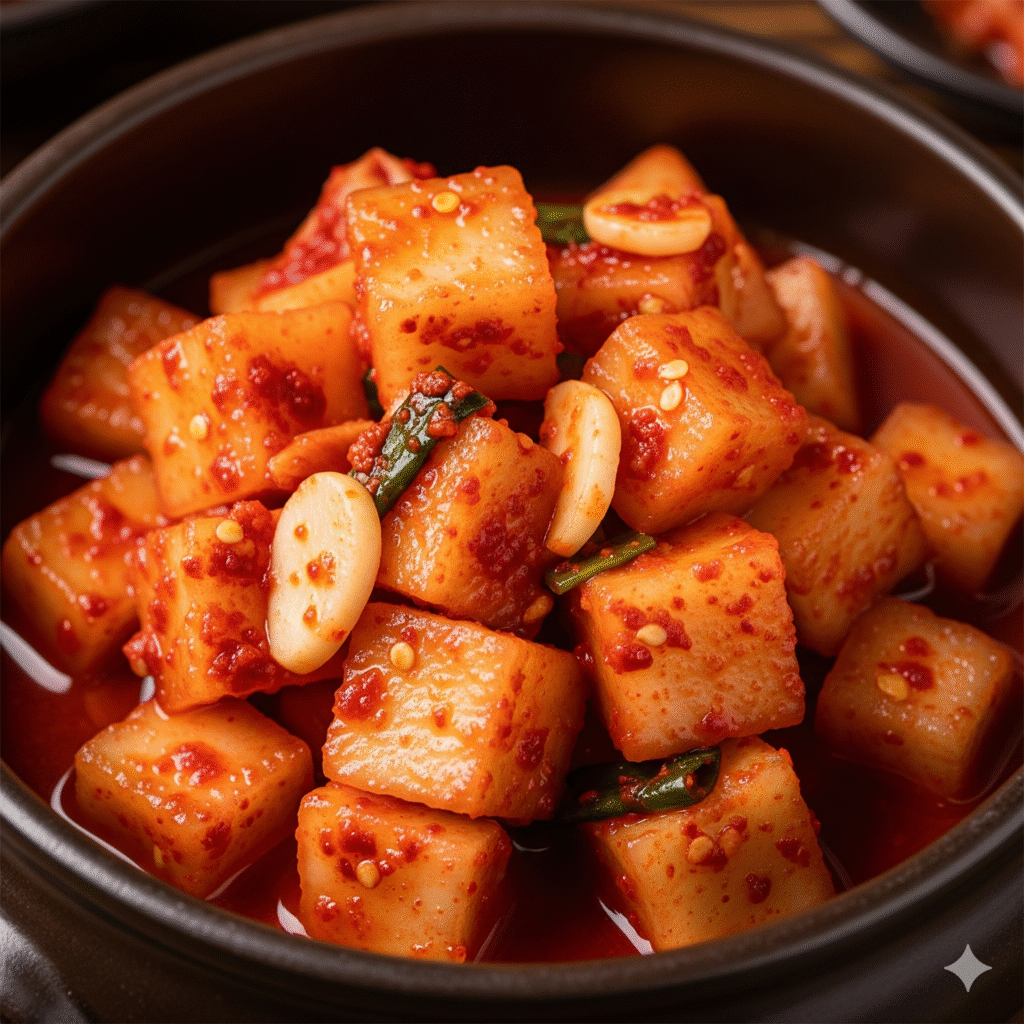
- Radish Kimchi (Kkakdugi): Made with cubed Korean radish instead of cabbage. It has a satisfying, crunchy texture.
- Cucumber Kimchi (Oi-sobagi): A fresh and light kimchi made by stuffing a paste into whole cucumbers. It’s often enjoyed in the summer.
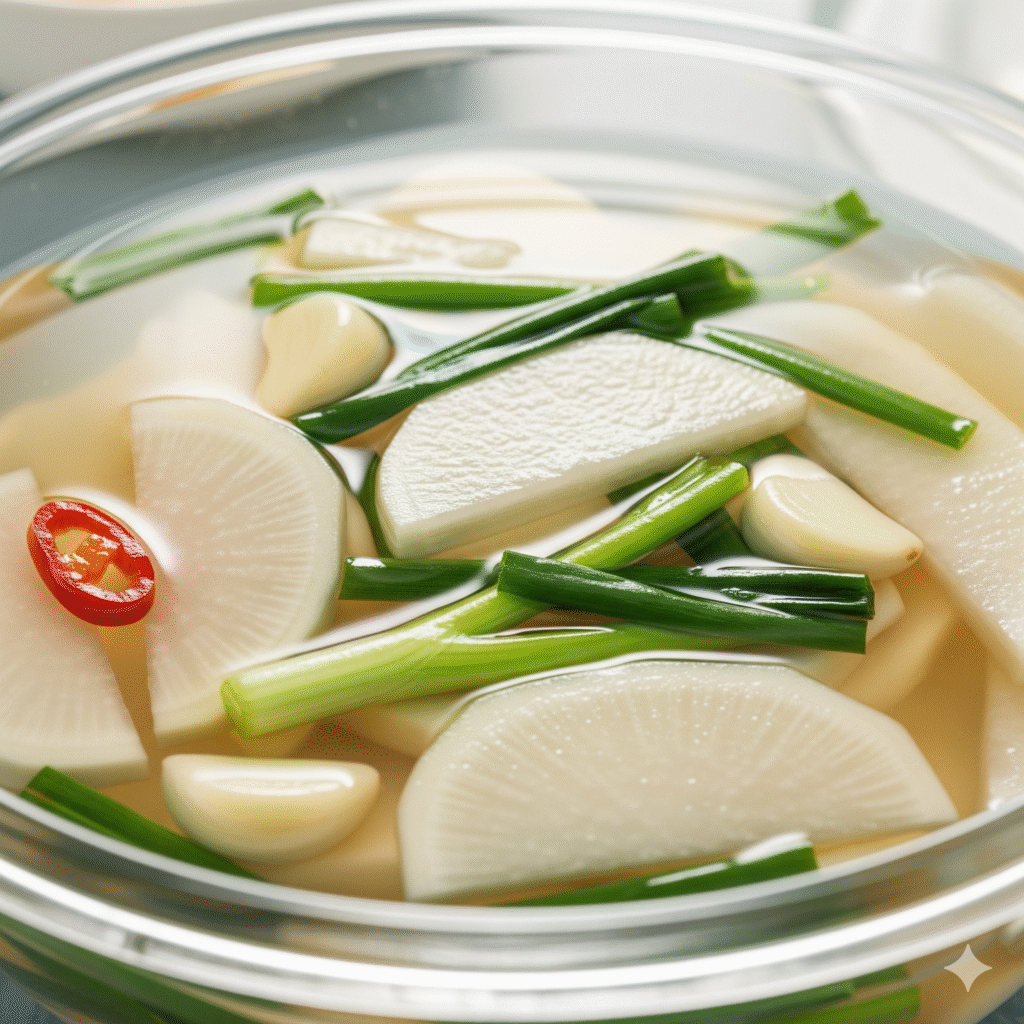
- White Kimchi (Baek Kimchi): A non-spicy version made without gochugaru. It is typically a very refreshing, slightly sweet, and salty kimchi that is perfect for those who can’t handle spice.