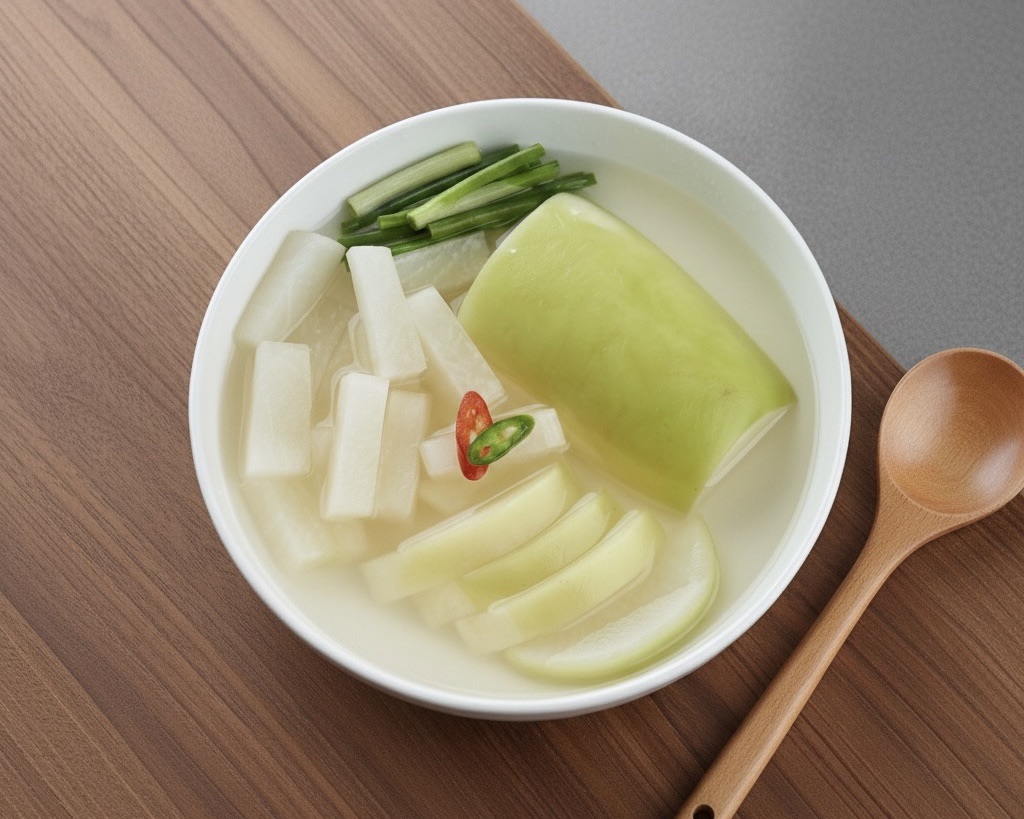
Discover Dongchimi, Korea’s crystal-clear water kimchi that’s surprisingly addictive. Complete recipe guide with substitutions, serving tips, and why this fermented drink is your new winter wellness companion.
Winter in Korea brings something magical to dinner tables — a crystal-clear, fizzy drink that looks like sparkling water but packs the complex flavors of fermentation. Meet Dongchimi (동치미), the unsung hero of Korean cuisine that’s been quietly refreshing palates for centuries.
Unlike its fiery red cousin, traditional kimchi, Dongchimi takes a completely different approach. This water-based fermented dish proves that sometimes the most powerful flavors come in the most understated packages.
What Makes Dongchimi Special?
Imagine biting into a piece of radish that’s been transformed by time and salt into something entirely new — crisp yet tender, familiar yet surprising. The clear broth that surrounds it carries whispers of garlic, ginger, and subtle sweetness, often with tiny bubbles dancing on your tongue from natural fermentation.
This isn’t just another side dish. Dongchimi serves as both food and drink, offering hydration and probiotics in one refreshing package. Korean families have long recognized its power as a palate cleanser and digestive aid, especially during heavy winter meals.
Gathering Your Ingredients
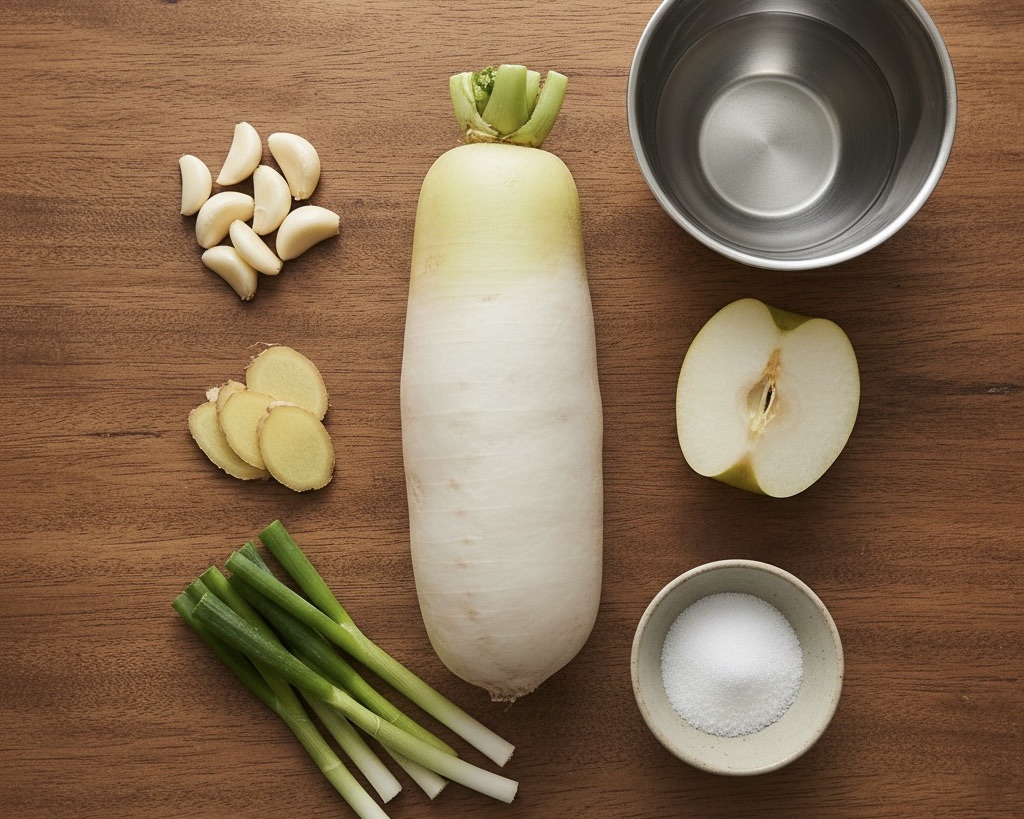
The Foundation:
- 1.5–2 kg Korean radish (mu) — the star of the show
- 6–8 whole garlic cloves
- 5–8 fresh ginger slices
- 3–4 green onions, cut into 4–5 cm pieces
- 1 Korean pear or apple, sliced (optional but recommended)
The Brine:
- 2–3 tbsp coarse salt
- 1–2 tsp sugar (optional, for balance)
- Filtered water to cover everything
The Art of Making Dongchimi
Step 1: Awakening the Radish
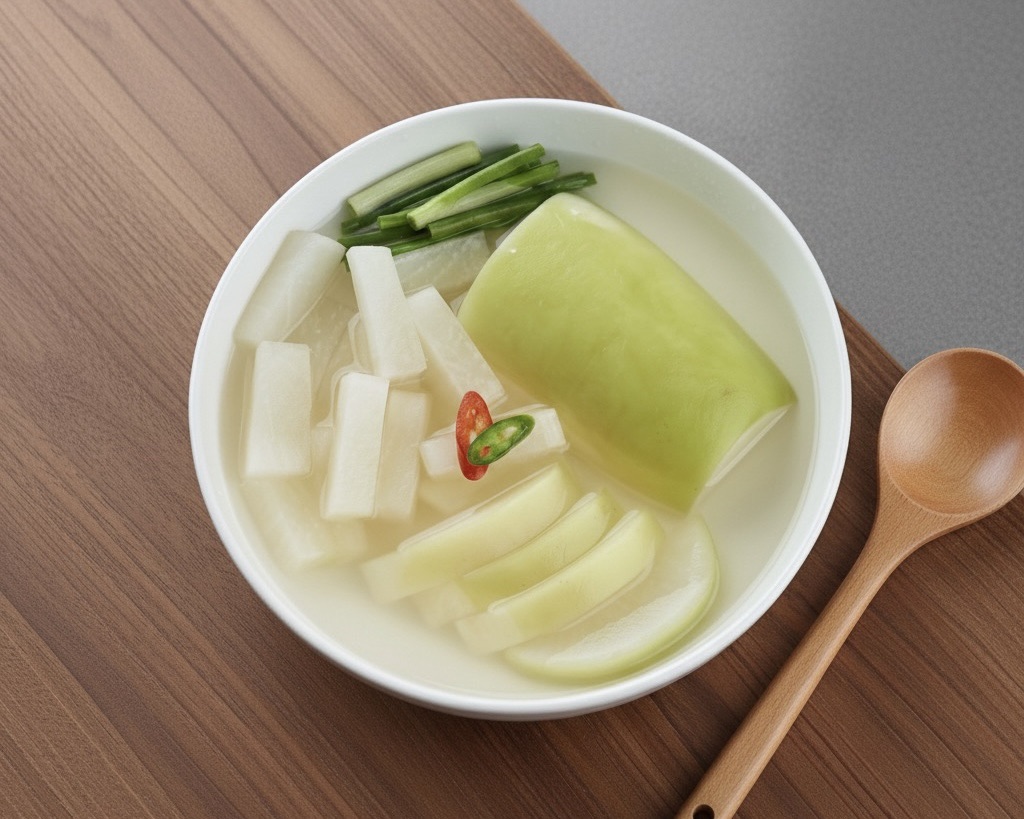
Peel your radish and cut it into bite-sized chunks or elegant long sticks — whatever appeals to you. Lightly salt the pieces and let them rest for 45–60 minutes. This process draws out excess water and prepares the radish to absorb all those wonderful flavors. If they taste too salty after this time, give them a quick rinse and pat dry.
Step 2: Creating the Life-Giving Brine
Dissolve your salt in 1.5–2 liters of filtered water. Taste as you go — you’re looking for that perfect balance where it’s pleasantly salty without making you pucker. A touch of sugar helps round out the flavors, though purists might skip this step.
Step 3: Building Layers of Flavor
In your fermentation container, create an aromatic foundation with garlic, ginger, green onions, and sliced pear. These ingredients will slowly release their essence into the brine, creating depth that develops over time.
Step 4: The Marriage
Add your prepared radish pieces and pour the brine until everything is completely submerged. This is crucial — any exposed vegetables can develop unwanted mold. Use a clean weight or even a zip-lock bag filled with water to keep everything below the surface.
Step 5: The Transformation Begins
Leave your container at room temperature for 1–2 days. You’ll know it’s working when tiny bubbles start appearing and the taste shifts from simply salty to lightly tangy. The temperature matters here — aim for 18–22°C (64–72°F) for optimal fermentation.
Step 6: The Patient Wait
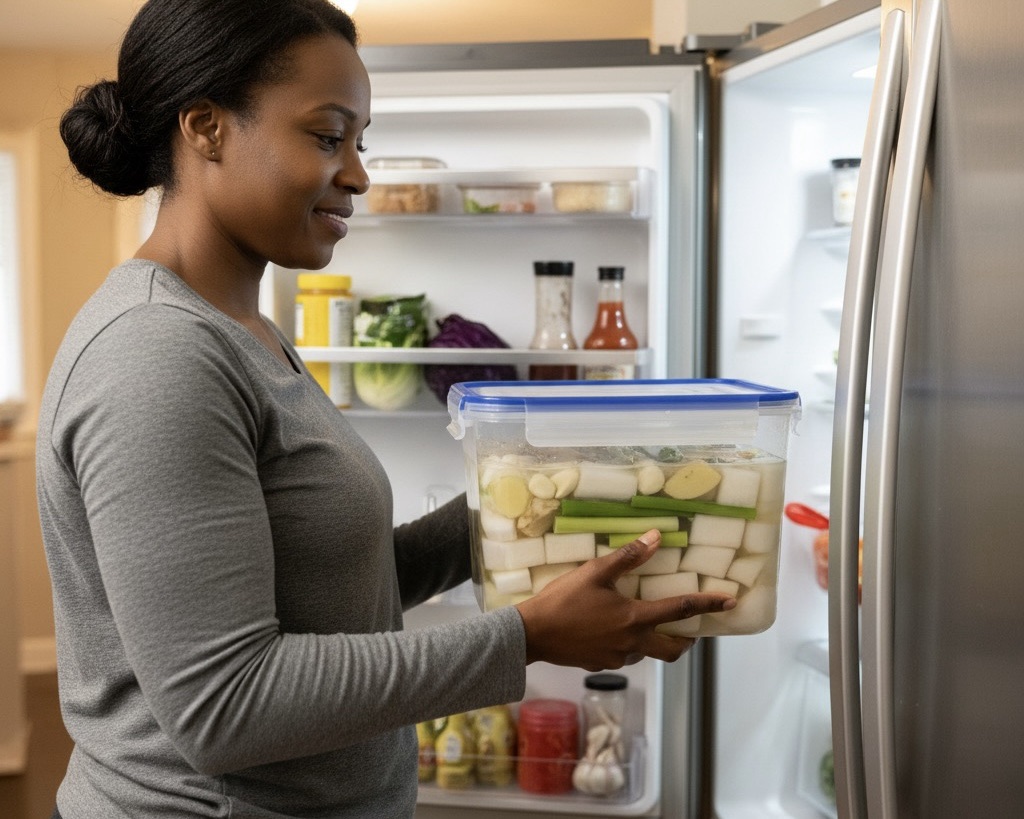
Transfer to your refrigerator where the slow, cold fermentation will continue. While you can enjoy it immediately, Dongchimi truly shines after 3–7 days of cold aging. The flavors marry and deepen, creating something greater than the sum of its parts.
Perfect Pairings That Make Sense
Cold Noodle Magic
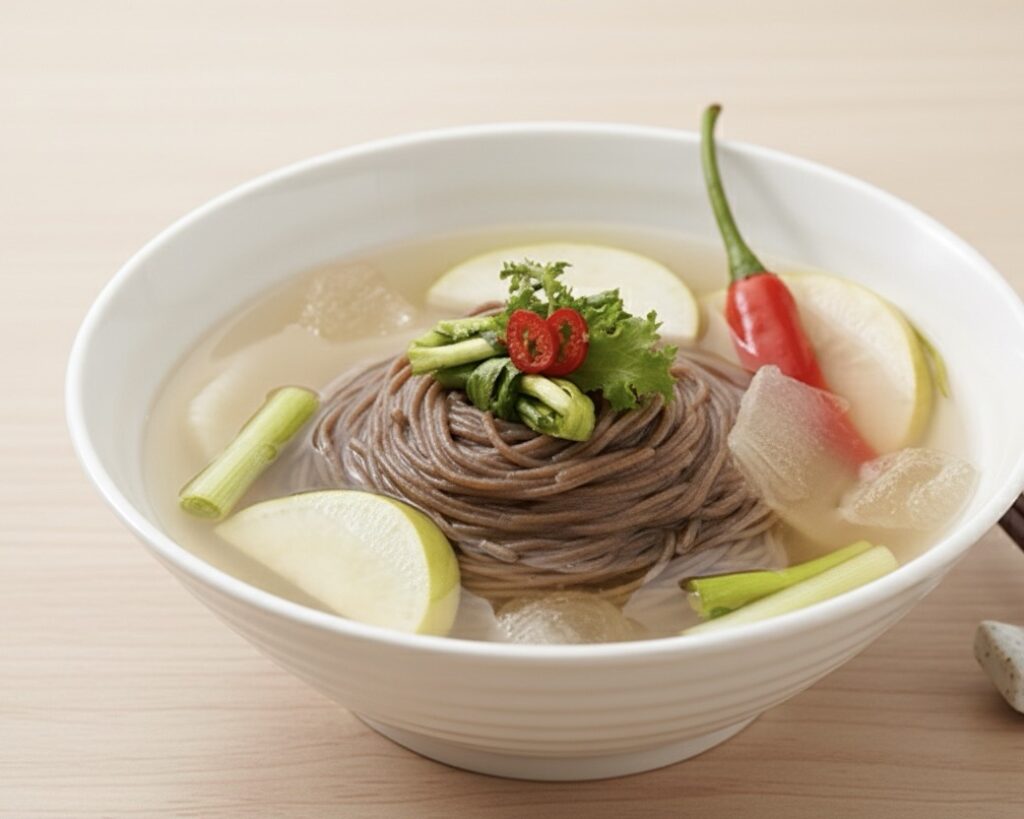
Korean naengmyeon (cold buckwheat noodles) traditionally swim in Dongchimi broth. The clean, refreshing liquid provides the perfect base for these chilled noodles, especially on hot summer days.
BBQ’s Best Friend
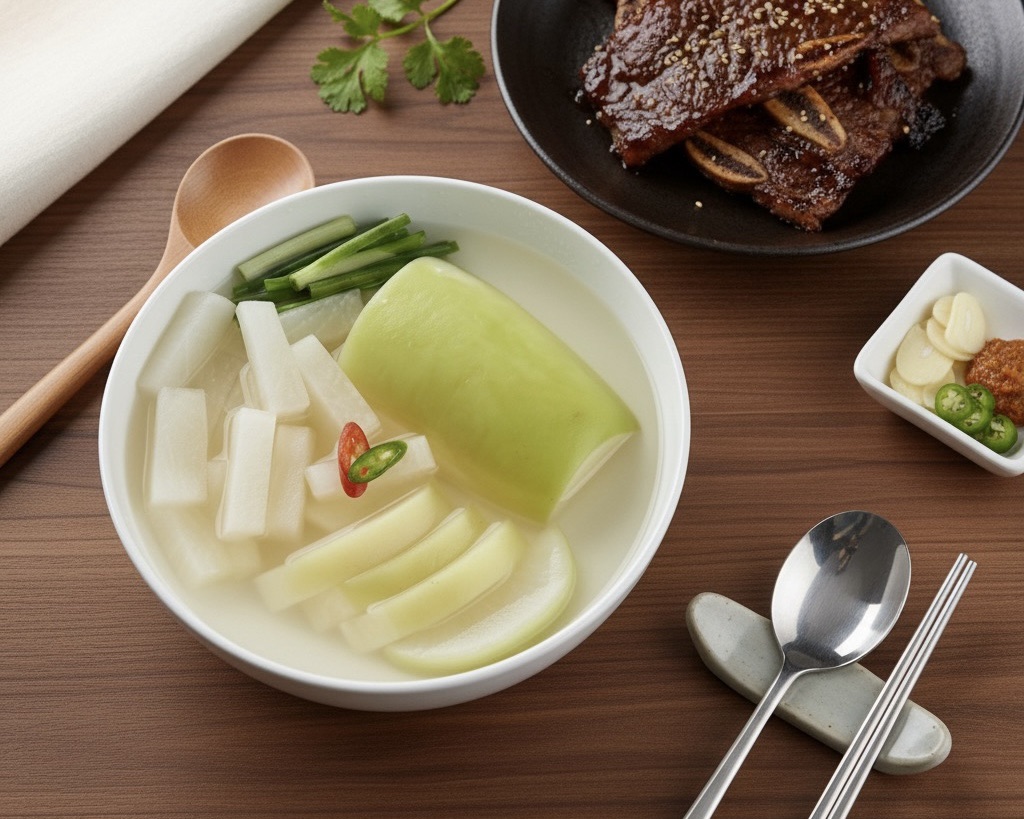
When Korean barbecue gets rich and heavy, Dongchimi steps in as the perfect palate cleanser. The cool, crisp broth cuts through fatty meats and resets your taste buds for the next delicious bite.
Everyday Wellness
Use it as a digestive aid with rice dishes and stews. Many Koreans start their meals with a small cup of Dongchimi broth to prepare their stomachs for the feast ahead.
The Health Story Behind the Bubbles
Fermentation isn’t just about flavor — it’s about transformation at a cellular level. As beneficial bacteria work their magic, they create probiotics that support digestive health. Unlike heavy, creamy probiotic drinks, Dongchimi delivers these benefits in a light, hydrating package.
The low calorie count makes it guilt-free refreshment, while the natural electrolytes from the salt and vegetables provide gentle hydration. For those who find traditional spicy kimchi too intense, Dongchimi offers all the fermentation benefits with none of the heat.
When Korean Radish Plays Hard to Get

Here’s the truth — finding authentic Korean radish outside of Korea can be challenging. The real deal (called mu) is shorter, stockier, and sweeter than other varieties. But don’t let this stop you from making great Dongchimi.
Your best substitute: Japanese daikon radish. It’s longer and slightly more watery than Korean radish, which might result in a lighter broth, but it absolutely works. Most Asian markets carry daikon year-round.
Other options: Chinese or Taiwanese white radish varieties perform similarly to daikon. I wouldn’t recommend turnips — they’re too peppery and will completely change the character of your Dongchimi.
Please note: This is based on common substitutions used by home cooks, though results may vary depending on the specific variety and freshness of your radish.
What to Expect: A Flavor Journey
Your first sip of Dongchimi might surprise you. It’s not what most people expect from “fermented vegetables.” The liquid is clean and refreshing, with a gentle tang that builds gradually. Some batches develop a subtle fizz from natural carbonation — this is completely normal and delightful.
The radish pieces maintain their crunch while taking on a complex flavor that’s part pickle, part refreshing snack. When pear or apple is included, you’ll notice a faint fruity sweetness that balances the salt and fermentation.
Keeping Your Dongchimi Happy
Once fermentation begins, your refrigerator becomes Dongchimi’s permanent home. Always use clean utensils when serving to avoid introducing unwanted bacteria.
The flavor will continue evolving, becoming more sour over time. If it gets too intense for your taste, dilute it with cold water or use the extra-sour batch as a base for cold soups.
Red flags to watch for: If the smell becomes unpleasantly sharp (different from the normal tangy aroma) or if you spot any fuzzy mold growth, it’s time to start fresh. Good Dongchimi should smell clean and appetizing.
Your Gateway to Korean Fermentation
Dongchimi represents something beautiful about Korean cuisine — the ability to transform simple ingredients into something extraordinary through patience and technique. It’s fermentation without intimidation, offering all the complexity of traditional Korean flavors in an approachable package.
Whether you’re looking to add probiotics to your diet, explore Korean cuisine, or simply want something refreshing and unique for your dinner table, Dongchimi delivers on all counts. The best part? Once you master this basic recipe, you can experiment with different vegetables and aromatics to create your own signature version.
Start your first batch today, and in a few days, you’ll understand why this clear, humble dish has been beloved in Korean homes for generations.


